28 Minutes to Work
I am a product, I trade my information for convenience.
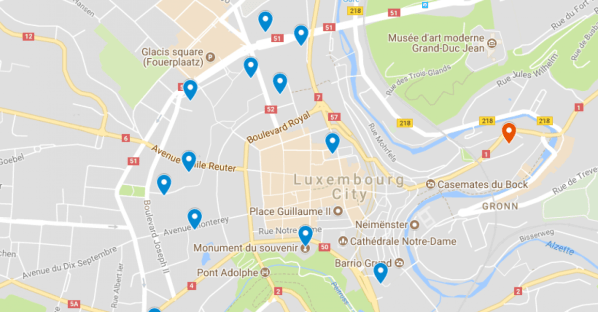
Is this a bad thing? I don’t really know, but I do know that Google Maps is super convenient, and it is the reason I am only a little bit late to everything I do. Google Maps is great. It tells me how long it will take to get to the store, what the traffic is like, how busy the store is at the current hour, and plenty of other really useful information. This service is so convenient that you probably do not even think (or care) about how Google can tell you all of this.
Google (or Alphabet if you must) is a behemoth, it provides a wide variety of services, mostly for free, and all it asks for in return is, well, everything about you. “Google is an ambitious company. Its stated goal, as cultural theorist Siva Vaidhyanathan noted in his thoughtful 2010 book The Googlization of Everything, is to “organize the world’s information.” (Black Box Society) The main purpose of collecting and organizing data is to find a pattern of behavior, “pattern recognition is the name of the game – connecting the dots of past behavior to predict the future.” (Black Box Society) Companies want to sell you things, and the best and easiest way to do that is to identify a pattern and exploit it. More often than not, you are not the only person with a specific interest, so you get put in a group, you are a measurable type, a “classification, empirically observed and transcoded as data, that become discrete analytical models for use in profiling and/or knowledge abstraction.” (We Are Data) I want to focus on how Google Maps works and the data that this service is collecting and organizing.
In my opinion, the live traffic function of Google Maps, is my favorite part of the service. Along with it being incredibly helpful, it is also a very cool function, but how does it track traffic so efficiently?
The Answer? You and me.
If you have location services enabled in Google Maps, they are using the speed your phone is traveling, as well as the phones of the people around you, to determine if there are any slow downs on your route. “The app is anonymously sending real-time data back to Google. It uses this info to calculate how many cars are on the road, and how fast they are moving. (Tech Insider). Google also stores this data, so if the algorithm identifies a pattern of heavy traffic at a specific time and place, it can predict future traffic patterns, and the AI can assist you in avoiding a slowdown. (Tech Insider, We Are Data, Black Box Society).

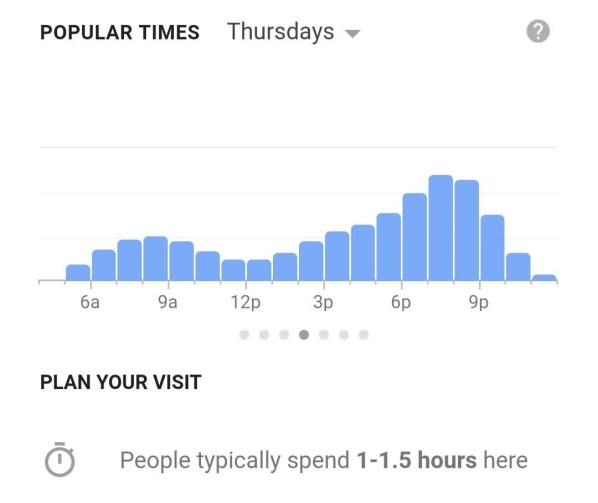
Another nifty thing Google can tell you based on phone location and density, is how busy a location currently is, when a location is normally busy, and when the busiest times are.
The way this information is parsed, is one we have readily gone over in class and in the readings; the data is collected, a pattern is identified, grouped, and redistributed. This is all done by a machine learning algorithm, which identifies patterns and determines meaning. (We Are Data) “This is the name of game.” (Black Box Society)

If you have location services enabled on your phone, Google always knows where you are, and they are surprisingly happy to share this with you. If you head over to the “Your Timeline” link in the Google Maps navigation, your entire day is logged there. This information is not logged by you, but by Google.
Here is an example of what that timeline looks like:

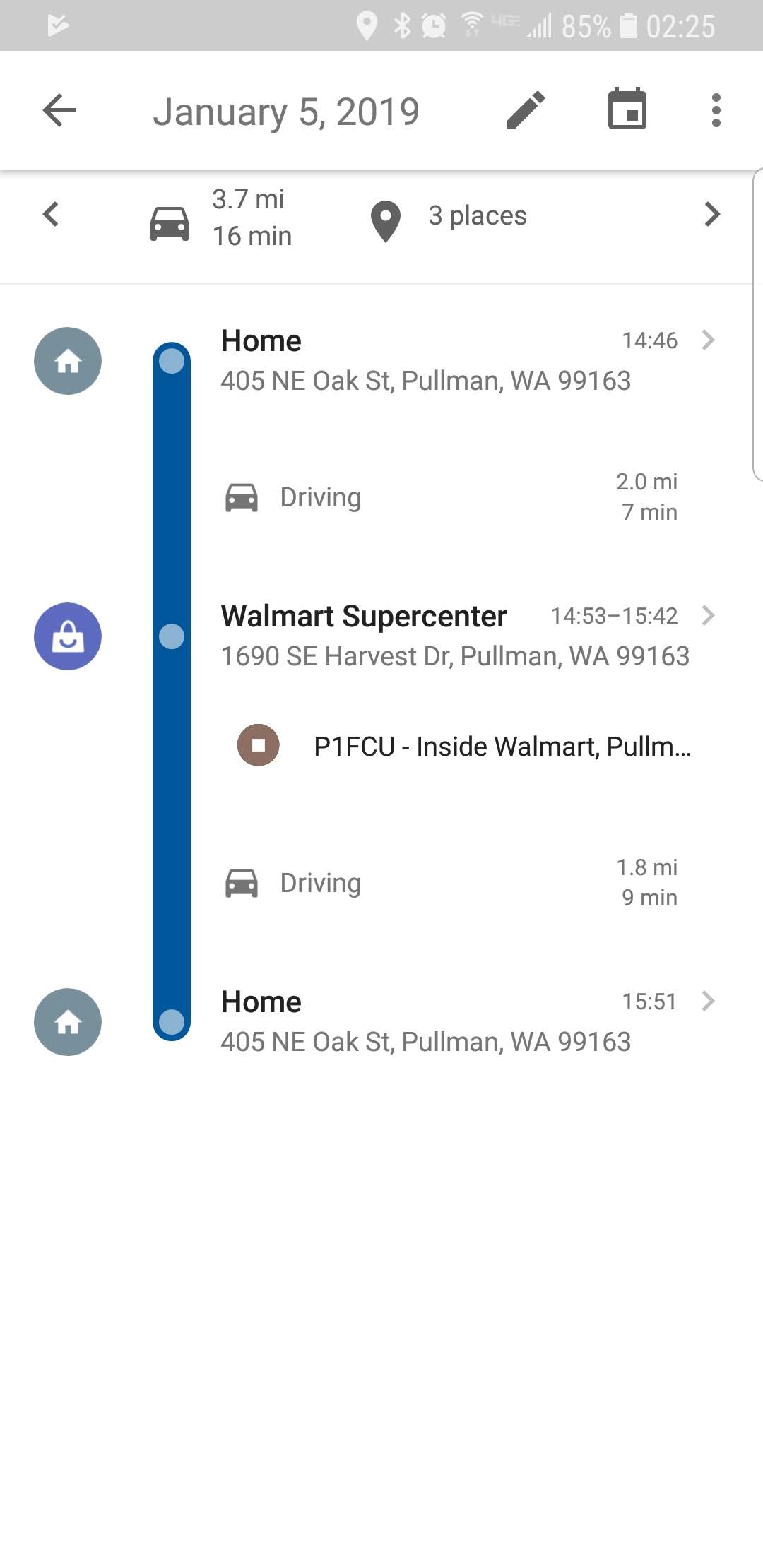
In the above example (My Own Timeline) :
January 4th, 2019:I drove to the OKC airport, caught a connecting flight in SLC, landed in Spokane, and then drove home. Google knew I was flying because of the speed my phone was moving, and it was able to place me in a specific location as well.
January 5th, 2019: I drove to Walmart, and went specifically to the P1FCU inside of the Walmart.
Not only is Google able to pin me down to a building, but they are able to place me at a specific point in that building.
The Google Timeline Logs:
- Where you are
- Where you go
- How long you were there
- How you got there
- How far away it was
- How long it took you to get there
This is how Google’s Algorithms can predict where you are going to go on a certain day and will give you traffic info based on when you normally leave.
Knowing what information Google log from your second to second location data is an important part of understanding how this company operates, and what they can do with this information.
So what does Google use this information for?
Well according to a NBC article,
“We [Google] use the information we collect from all of our services to provide, maintain, protect and improve them, to develop new ones, and to protect Google and our users,”
Google says in its privacy policy.
“We also use this information to offer you tailored content – like giving you more relevant search results and ads.”
Google offers free access to these tools and in return shows you super-targeted advertising, which is how it made $31.2 billion in revenue in just the first three months of 2018.”
NBC NEWS
I would like to reiterate: We are a product and we trade our information for convenience.
We know that Google uses our information to sell things to us, so how does this apply to Maps?
Well, in May 2018 Google rolled out Personalized Maps. (TechCrunch)
“Because this is Google, that new experience is all about personalization with the help of AI.
So in the new Maps, you’ll find the new “For you” tab that’s basically a newsfeed-like experience with recommendations for you. You’ll be able to “follow” certain neighborhoods and cities. When Google Maps finds interesting updates in that area — maybe a restaurant that’s trending or a new coffee shop that opens — it’ll tell you about that in your feed. […]
Google via TechCrunch
Maps will present you with a personalized score that tells you how closely a restaurant matches your own preferences. Google Maps learns about those preferences based on how you have rated this and other places and your own preferences. “
This brings us back to measurable types, and machine learning algorithms. Google can target ads to us and make recommendations based on our location history. If I go to the same types of stores and the same types of restaurants, every day/week/month; the algorithm will detect that pattern, put me in a group of other people like myself, and then attempt to sell things to us. “Numbers turn people into objects to be manipulated.” (We Are Data) All of our information, everything we do, everywhere we go; is nothing but a dollar sign to these large corporations. To them, our data defines us, but “When our data defines us, the complexities of our emotional and psychological lives online are flattened out for purposes of mass-scale, approximate data analysis.” (We Are Data)

 Abby Martinez